
by Antonino Napoleone, Ivy Rose Sebastian | February 15, 2022.
The selection of the most beautiful scientific images of 2021 culminates in a new gallery of shots of undeniable beauty and allure. Although it was difficult for us to separate this kaleidoscopic collection into two parts, we wanted to use it to try and bring together the different and distant fields of science under the aegis of photography.
The aim was to convey some of the emotions experienced by researchers, be it within the confines of the laboratory, or while studying the effects of climate change on the environment or even out in space. And the most powerful manner to do so is through visual imagery, which speaks louder than words and transcends linguistic limitations. Through an image, it is easier to learn, to understand, to impart a message and even to share a sense of unfiltered wonder about protagonists that we are not used to observing in our daily life.
As mentioned in the first part of the article (look at the best science images of 2021 Part 1), Nature has selected a list of images that had won international science photography awards. Therefore, we strongly recommend taking a look at part 1 again, and then, dive into the second part of this illustrative journey of the most beautiful scientific images of 2021.
So, enjoy and let us know which one is your favourite!
Martian Ingenuity
This year, missions from China, the United States and the United Arab Emirates arrived on Mars. This photo, taken from a camera on NASA’s Perseverance rover, that was the protagonist of one of our previous articles (look at the first images of the Martian panorama), shows its Ingenuity helicopter being lowered onto the surface of the red planet. Wonderful images of the Red Planet have already reached our eyes since last year, but the extraordinary aspect of this shot is that Ingenuity has become the first machine to achieve powered flight over another planet.

Burning up
This year the United States was once again ravaged by extreme wildfires, exacerbated by heatwaves linked to climate change. Here, firefighters in California battle a blaze near the southern shore of Lake Tahoe, where thousands of people were evacuated in late summer.

Scuba divers
Evolutionary biologists reported that some species of Anolis lizard have adapted to re-breathe exhaled air underwater, using a bubble on their snouts. The trick allows them to stay submerged for more than 15 minutes, hiding from predators. This feature is simply extraordinary!

Ancient insect
This portrait of a 40-million-year-old gnat in amber, by photographer Levon Biss, got an honourable mention in the 2021 Nikon Small World Photomicrography Competition. It seems to be perfectly preserved and protected by a gold plate!

Selection of extra photos
Flames and fury
This moving moment was captured by Bloomberg photographer, Konstantinos Tsakalidis on the island of Evia, Greece. This woman’s anguish as the raging wildfire draws closer to her house is heartbreaking. The colour and composition remind the painting The Scream by Edvard Munch. No matter how many times we look at it, it remains both beautiful and upsetting.

Twin pandas
Last year, giant panda Huan Huan gave birth to twin female cubs at Beauval ZooParc in France. It was such a joy to see the safe delivery of these newborns, and even more so to see them in this picture, healthy and thriving at one-month-old. We can’t wait to follow the twins’ progress and see even more gorgeous images of them growing up.

Goma evacuation
When the volcano Mount Nyiragongo suddenly started spewing lava towards the crowded city of Goma in the Democratic Republic of the Congo, photojournalist Guerchom Ndebo was there to document the mass evacuation of the city in the middle of the night, under the glow of light from the crater. Scientists fear that further volcanic activity in the area could lead to a ‘limnic eruption’ from nearby Lake Kivu, which would release huge amounts of toxic gas into the surrounding valley. Luckily, Nyiragongo’s eruption in May last year did not trigger such an event, and life has slowly returned to normal in Goma.

Liquid Rothko
A narrow strip of road divides the ochre-coloured toxic waters of a mine reservoir from fresh green waters near the Spanish city of Huelva. This image — reminiscent of a painting by Mark Rothko — instantly captures the viewer’s attention, with its abstract simplicity evoking tranquillity and peace. But this eventually gives way to the realization that, once again, human activity is tainting natural beauty.

Fast fashion
The fashion industry’s environmental impact is coming under increasing scrutiny. People currently accumulate more garments, use them less often and discard them faster than at any time in history — a trend that is predicted to worsen. This huge dump in Accra, Ghana, is filled with second-hand clothing imported from Australia, Europe and the United States that cannot be resold. People pick through the remnants while cows scavenge for food. The scene is a reminder that humanity needs to consider all of its wasteful behaviour if it wants to protect Earth.

Conclusions
Our journey to discover the most beautiful scientific images of 2021 comes to an end. It has certainly been a year that has been characterised by many episodes, both positive and negative, and this visual palette was a stellar confirmation of those different events. Our society is evolving at a stratospheric rate, and science is taking over as the main vehicle in this transition. Through photography, we can permanently capture an episode, a discovery or an atmospheric phenomenon that will surely not be repeated in the future. Reviewing a year in science through a few snapshots helps us to remember what we have experienced and reinstates our role in society from an evolutionary and technological standpoint.
With each year that passes, we will be able to add new stories, emotions and new protagonists, to take with us into our photo gallery, which we will continue to expand with great pleasure and share with you!
References
- https://www.nature.com/immersive/d41586-021-03521-3/index.html
- https://www.nasa.gov/feature/goddard/2021/new-nasa-visualization-probes-the-light-bending-dance-of-binary-black-holes
- https://www.focus.it/ambiente/animali/la-lepre-saltatrice-si-illumina-al-buio
- Olson, E.R., Carlson, M.R., Ramanujam, V.M.S. et al. Vivid biofluorescence discovered in the nocturnal Springhare (Pedetidae). Sci Rep 11, 4125 (2021). https://doi.org/10.1038/s41598-021-83588-0.
You may also like this

Europe’s top universities: Where research thrives in 2025

Microbes and Mood: Deciphering the Connection for a Happier You!
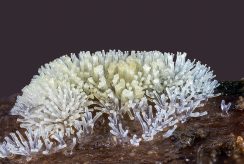
Can’t solve a maze? Ask a slime mould!

The neurobiology behind the Christmas spirit
