
by Antonino Napoleone, Ivy Rose Sebastian | February 03, 2022.
As avid photography and science lovers, we couldn’t resist selecting and sharing a dazzling assortment of scientific images that have won the most prestigious international photography awards in 2021, with our readers. The team at the well-known journal Nature have compiled a truly fascinating and evocative list, full of values and symbols that have characterised an entire year, moving across different scientific disciplines that embrace biomedical research, astrophysics, the study of climate change and even to the depths of the ocean floor. Right from the start, it was shaping up to be a particularly intense year full of scientific events that inspired some extraordinary shots (see the most beautiful photos of March 2021). Undeniably, these initial sensations have only increased expectations, which have certainly not disappointed, given the current collection of stunning images that we are going to explore together.
All we can say is enjoy your reading, and here are the best scientific images of 2021, part 1!
Volcanic ash
The eruption of the Cumbre Vieja volcano on La Palma in the Spanish Canary Islands in September left large areas of land buried by ash. The photo from the photographer Emilio Morenatti shows how the land has been affected by this huge accumulation of ash and how it has undergone this change. Moreover, the volcano spewed out a huge volume of lava, which destroyed hundreds of houses as it flowed down to the west coast of the island, eventually spilling over the cliffs and into the Atlantic Ocean.

Nano beach
This image depicts a typical tropical scene, except that it is only one-quarter of a millimetre tall! It is made from molybdenum disulphide nanostructures, shaped with a laser and with a scanning electron microscope. Artificial colours using special software complete the tiny masterpiece, which won third place in the Nanoartography 2021 competition. That’s what nanotechnology is about!

Shipwreck shot
SS Thistlegorm was a British Merchant Navy ship that sank in the Red Sea on 6 October 1941 during World War II following an attack by the German air force. The ship was 126 metres long and 18 metres wide and still contains the cargo of military supplies it was carrying. The wreck is slowly becoming part of the local coral reef. Photographer Simon Brown captured this image of the ship in 15,005 frames, each adjusted to give a ‘straight down’ view before being tagged with GPS data and merged with the others.

Cell close-up
The young PhD student Paula Diaz used fluorescence microscopy to capture this colourful image of a rat embryo’s dorsal root ganglion, a group of sensory nerve cells that detect pain, among other things. The shot won fourth place in the 2021 Nikon Small World Photomicrography Competition.

Hybrid embryo
Last April, scientists announced that they had successfully grown the first monkey embryos containing human cells. Human-animal hybrids might one day provide ideal experimental models for testing drugs or be used to produce human organs for transplants. However, this type of experiment also raises numerous ethical questions.

Black holes
This illustration shows how two supermassive black holes would be able to distort the light emanating from the hot gases around them. Such black holes can have mass millions or billions of times greater than the Sun. To create this visualization, astrophysicist Jeremy Schnittman of NASA’s Goddard Space Flight Center in Greenbelt, Maryland, USA, used a supercomputer to calculate the path taken by light rays through the warped space-time around the simulated black holes. A huge step forward in the study and understanding of black holes.

Watch the full video here: https://www.nasa.gov/feature/goddard/2021/new-nasa-visualization-probes-the-light-bending-dance-of-binary-black-holes
Raving rodent
The curious image shows a South African springhare (Pedetes capensis) that fluoresces hot pink glow under ultraviolet light. This was reported by researchers studying ‘biofluorescence‘ in mammals. This is different from bioluminescence (typical of fireflies) but is the body’s ability to absorb ultraviolet electromagnetic radiation and re-emit it in the form of visible light. The biological purpose is being investigated, but it is thought to be related to mating reasons or defence mechanisms against predators. However, the function of this feature and the intensity of the colour are still a mystery to be unravelled, as it is truly unique among all known biofluorescent mammals.

Plant life
The photo shows stacks of tubes containing microalgae exposed to ultraviolet light, which are able to produce astaxanthin, a red pigment that is extracted and sold as a dietary supplement. This system is part of a bioreactor facility run by the Icelandic company Algalif. The facility is powered entirely by geothermal energy and uses an ultra-energy-efficient lighting system.

These are just eight of the most beautiful science shots of 2021 according to Nature. Part 2 will be published soon, so if you want to discover and be fascinated by more amazing scientific images, just keep following us!
References
- https://www.nature.com/immersive/d41586-021-03521-3/index.html
- https://www.nasa.gov/feature/goddard/2021/new-nasa-visualization-probes-the-light-bending-dance-of-binary-black-holes
- https://www.focus.it/ambiente/animali/la-lepre-saltatrice-si-illumina-al-buio
- Olson, E.R., Carlson, M.R., Ramanujam, V.M.S. et al. Vivid biofluorescence discovered in the nocturnal Springhare (Pedetidae). Sci Rep 11, 4125 (2021). https://doi.org/10.1038/s41598-021-83588-0.
You may also like this

Europe’s top universities: Where research thrives in 2025

Microbes and Mood: Deciphering the Connection for a Happier You!
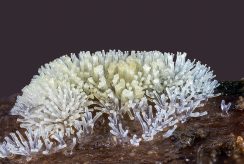
Can’t solve a maze? Ask a slime mould!

The neurobiology behind the Christmas spirit
