
By Pasquale Romeo (Professor of Psychiatry at the University “Dante Alighieri” of Reggio Calabria), Valentina Zema (Psychologist specialized in Family Psychology and Relational Psychology) | May 29, 2020
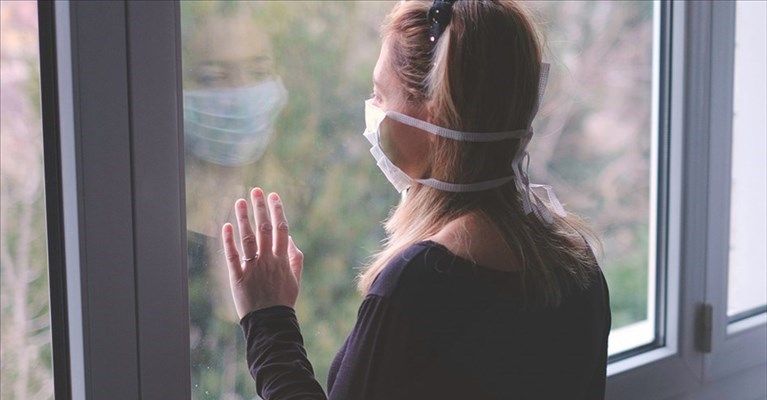
The pandemic caused by the new Coronavirus has forced many people to self-isolation at homes or in dedicated quarantine facilities. The restrictions applied to stop and depot the pandemic outbreak of COVID-19 required forced quarantine and social distancing. Suddenly millions of people were faced with a frightening, unknown, and surreal situation: habits have changed, schools and offices closed, no more sports, walks or dinners with family and friends. Everything has changed, masks and social distancing have become part of everyday life. The most complicated and difficult aspects to deal with and manage are related to the lack of control, lack of information, predictability, and general helplessness. There are many different emotions we have to live with; first of all, fear. Fear is a powerful but also useful emotion; it works well if proportionate to the dangers. Today, however, many dangers do not depend on our experiences. We know about them because they are described by the media and by the news circulating on the web that tends to exaggerate real dangers. It can also happen that fear becomes excessive in relation to the real risks. In these cases fear turns into panic and ends up damaging us. We are more afraid of unknown, rare, and new phenomena and the spread of the Coronavirus has precisely these characteristics. Therefore, in this period our brain is doing an extraordinary job of adaptation, and is under a huge load of stress and emotions than what we were used to.
Emotions and stress
The word “emotion” comes from the Latin “emovus”, past participle of the verb “emovere” which means “to move, to move away”. Literally, therefore, emotion is defined as “any agitation or disturbance of the mind, and any passions, any state of mind that has been broken down or excited” (Palazzi, 1959). Emotions can be defined as “complex responses, produced when the organism detects an adequate stimulus” (Benuzzi and Nichelli, 2008). These responses consist of changes in the internal state (e.g., an increase or decrease in heart rate), the external appearance of the body (e.g., through changes in facial expression or voice intonation), and the brain regions where the basis of thoughts are generated. Emotion is also considered as a complex of reactions related to triggering conditions, usually defined (an external event, an image, or memory), which occurs in a short period of time (Palomba and Stegagno, 2004). Emotions allow an evaluation of the surrounding environment, allowing us to evaluate and organize the stimuli that affect us on the basis of their relevance; they regulate the physiological state according to the situation we have to face; they prepare us for action and act in response to the events that occur around us; they model our future behaviour on the basis of past experiences; they help us to interact with others: through our verbal or non-verbal behaviour we explicit our emotions. The emotional component impacts on our lives, as well as giving us the necessary depth to modulate our emotional relationships, especially when we talk about stress. It is precisely our emotional reactions that transform external stimuli into stress, which we end up considering as threatening and stressful. It is, therefore, necessary to rediscover and reinvent some mechanisms of modulation of emotional response, of self-regulation, which can help us both from the relational point of view and in stress management.
In current use, stress indicates nervous tension, wear, and tear, psychophysical fatigue but also the fact, the situation is the cause of it. The origin of the term is also to be found in areas completely different from those in which we frame it today, but in psychology, this is placed in a correlation between stress and the effects it has on what it acts, whether it is a material, a person, or his soul, stress acts by changing the state, and testing its resistance (Romeo, 2019). Events capable of causing stress are called “Stressor” and may be of a physical or psychological nature. Stress can have direct physiological effects on our body causing an increase in blood pressure; an increase in hormonal activity; a general decrease in the immune system (Romeo, 2019). At the same time, it can induce a person to engage in dysfunctional and health-dangerous behaviors such as inappropriate eating habits. From a psychological point of view, people exposed to high levels of stress may find it difficult to functionally cope with life’s difficulties and may even be completely incapable of acting. As we have mentioned, one of the most typical reactions in these cases is to experience fear, but if we fail to manage it by perceiving the Coronavirus as a dangerous and unstoppable predator, we risk to implement impulsive, frenetic and irrational behaviors. Here we often move on to panic or generalized anxiety; some individuals develop a situation of hypochondria, as a tendency to excessive concern for their state of health, perceiving every slightest symptom as an unequivocal sign of Covid-19 infection. And then it is essential to reflect on the fact that a person suffering from anxiety disorders may experience uncontrollable anguish, and a person who has a problem with alcoholism, who may be under treatment with groups or individual therapy, could abuse of alcohol even more than before. The lockdown might be an even more difficult and lengthy ordeal, for these people who were unprepared and were overwhelmed because of the previous conditions. Inside the walls of the houses, millions of already fragile people have been blocked, who risk irreparable damage to their mental health. The quarantine was initially seen by someone as a nuisance, by others with a smile, even a pleasant one. However, we soon realized that being locked down for weeks is not a holiday. For many, the lockdown was not only unpleasant or melancholy. It is a black beast whose bites will leave wounds that are difficult to heal.
The psychological impact of quarantine
For humans, self-isolation is a drama that should not surprise us. We are in unknown waters: we have no idea what happens psychologically and culturally during and after a lockdown but we have some experience that can guide us. In the last few weeks several studies have compared and correlated the psychological effects of quarantine, using mainly data collected in the past years. Five studies have compared psychological assessments for people who have been quarantined with those of a non-quarantine control group. In one study, hospital staff who came into contact with SARS were quarantined for nine days. The most frequently diagnosed disorder, at the end of quarantine, was acute stress disorder characterized by a period of intrusive memories, following a traumatic event witnessed or experienced first-hand. Symptoms can be anxiety, intrusive and recurrent; distressing recurring memories of the event; disturbing recurring dreams about certain events; dissociative reactions; intense psychological suffering when remembering the event; persistent inability to feel positive emotions; hypervigilance and irritability or outbursts of anger. Another study found that people placed in quarantine were four times more likely to develop post-traumatic stress disorder (PTSD) than the non-quarantine control group. Post-traumatic stress disorder occurs as a result of an extreme traumatic factor that the person experienced, witnessed, or was confronted with an event or events that involved death, or threat of death, or serious injury, or a threat to their own or others’ physical integrity. People with PTSD experience difficulty in controlling their emotions, irritability, sudden anger or emotional confusion, depression and anxiety, insomnia, but also a determination to avoid any act that forces them to remember the traumatic event. Another widespread symptom is guilt, for surviving or not being able to save others. From a more physical point of view, some symptoms are chest pain, dizziness, gastrointestinal problems, migraines, weakening of the immune system. Three studies have shown that longer periods of quarantine were associated with worse mental health deterioration with symptoms of post-traumatic stress, avoidance behavior, and anger. It has been shown that people quarantined for more than ten days showed significantly higher post-traumatic stress symptoms than those quarantined for less time. Obviously, the long confinement, the loss of the usual routine, and the reduction of social relationships exponentially increase the sense of helplessness, insecurity, and anxiety. Furthermore, in the studies examined, the financial loss resulting from quarantine has been classified as a high-risk factor for the development of psychiatric disorders.
An article published in these days by the medical journal Lancet tried to analyze and summarize the studies on the psychological effect of past quarantines. In the article “The psychological impact of quarantine and how to reduce it: a rapid review of the evidence” by Samantha K. Brooks, Rebecca K. Webster, et al. , a review of the psychological impact of quarantine was made using three databases. Of the 3166 articles found, 24 are included in this review. Most of the studies reviewed reported negative psychological effects including symptoms of post-traumatic stress, confusion, and anger. Stress factors included increased duration of quarantine, fears of infection, frustration, boredom, inadequate information, financial loss, and blame. Overall, this review suggests that the psychological impact of quarantine is broader, more substantial, and can last for a long time. This does not mean that quarantine should not be used; the psychological effects of not using quarantine and the spread of the disease could be worse. Therefore, in situations where quarantine is considered strictly necessary, the Government should put people in self-isolation for no longer than is required, provide rational explanations, clear information on protocols, and ensure that sufficient safeguards are provided.
Resilience and emotional self-regulation
People in quarantine must understand the situation and how it will evolve, otherwise, emotions will take over rationality and lead to risky and reckless behavior. The more the individual will be in a panic, resulting from fear or lack of information, the narrower the field of rationality and self-reflexivity will become. What is happening today because of SARS-CoV-2, is a major health emergency, the quarantine required of people is a way to safeguard their lives. However, this practice could have long-term effects (we even talk about months or years) on the human psyche and this should not surprise us. However, we must calculate the risk-benefit of any restrictive action taken globally. This unprecedented restriction of freedom was unfortunately necessary to stem the new Coronavirus. A limited dose of fear and alertness is necessary, indeed essential. However, the limit between a functional activation (eustress or positive stress) and an excess of alertness with poorly lucid and counterproductive behavior (distress or negative stress) is thin. Of fundamental importance is also the concept of resilience. Resilience is the ability to cope with difficult moments, traumatic events, and in general the “Stressors” by reorganizing life in a positive way in the face of difficulties. Many studies in the literature tell us that a balance must be found between changing situations over which it is possible to exercise some control and accepting the emotional experiences linked to stressful situations, over which it is not possible to act, modifying or reducing them. This balance can be achieved through processes of emotional self-regulation. A process that can be enhanced to ensure better management of stressful emotions, derived from exposure to difficult life situations. Surely a fundamental aspect is to recognize unpleasant emotions and try to identify, even when it may seem difficult to admit it, the sources of stress. It is fundamental to accept to have small moments of fragility that are normal and physiological for everyone and to accept emotions, even the most unpleasant ones. The ability to be present to oneself can be built in many ways, from meditation or mindfulness to practicing the most varied activities while keeping our attention on what we are doing or, more simply, listening to ourselves. Waiting is a fundamental mechanism of self-regulation. Emotions related to stressful events push, or almost impose quick reactions on us, but if this was functional in situations of real physical danger to which humans used to be exposed thousands of years ago, such as running away in front of a ferocious animal, it seems ineffective in today’s context.
References:
- Brooks, S. K., Webster, R. K., Smith, L. E., Woodland, L., Wessely, S., Greenberg, N., & Rubin, G. J. (January 01, 2020). The psychological impact of quarantine and how to reduce it: rapid review of the evidence. The Lancet.
- Centers for Disease Control and Prevention. Quarantine and isolation. 2017.
- https://www.cdc.gov/quarantine/index.html
- Public Health England. Novel coronavirus (2019-nCoV) – what you need to know. 2020.
- Rubin GJ, Wessely S. The psychological effects of quarantining a city. BMJ 2020
- Rapid reviews to strengthen health policy and systems: a practical guide. 2017.
- http://www.salute.gov.it/
- https://www.epicentro.iss.it/
- https://www.who.int/
- http://www.psychiatryonline.it/node/8501
- Palaces, F. (1959). Novissimo Dizionario della lingua italiana. Edited by Folena, G. Casa Editrice Ceschina, Milan.
- Benuzzi, F., Nichelli, P. (2008). Emotional disorders associated with neurological diseases. In: Papagno, C., Vallar, G. Manuale di neuropsicologia. Il Mulino, Bologna, pp. 391-400.
- Palomba, D., and Stegagno, L. (2004). Psychophysiology of emotion. In: Clinical Psychophysiology. Carocci editore, Rome, pp. 65-92.
- Romeo, P. (2019). Positive thinking. How to cope and overcome stress. Diarkos Publisher.
You may also like this

Europe’s top universities: Where research thrives in 2025
Microbes and Mood: Deciphering the Connection for a Happier You!
Can’t solve a maze? Ask a slime mould!

The neurobiology behind the Christmas spirit
