
by Domenico Gangemi, Antonino Napoleone, Giuseppe Scarlata | 3 July 2020
Despite the economic constraints, during the last years the health care systems in Western countries have effectively guaranteed (and they still do it) the treatment of acute pathologies and mainly infectious diseases. The increase of the life span has inevitably led to an increase in the prevalence of chronic diseases such as cardiovascular, oncological and metabolic diseases. Among the latter there is diabetes mellitus, in particular type 2 diabetes, of dietary origin, a complex disease caused by environmental causes (diet rich in simple sugars and fats) in patients with an important genetic susceptibility. The metabolic damage induced by hyperglycemia makes diabetes a multi-organ disease, due to the complications caused by hyperglycemia itself. The organs most affected are the heart, large and small blood vessels, kidneys, eyes, nervous system, liver.
Cytokine storm syndrome
Diabetes involves also the immune system, that mainly has the function of defending against infections.
After being contracted by air, the Coronavirus reaches the respiratory tract where the immune system has to fight the viral penetration and replication. If there is no initial ‘barrier’ mechanism at this level, the virus is able to enter and spread into the bloodstream. If there is an hypofunction of the immune system, during the next phase, the virus can invade more easily the whole organism In the last phase of the disease, the cytokine storm syndrome, the inflammatory cells react excessively against the virus and they produce harmful molecules directed to the infected cells but also to our own organism. If this phase is not treated with effective therapies, it can seriously damage the organism, quickly leading to death. This happens especially in people suffering from other chronic diseases such as diabetes.
It is necessary that the immune system act quickly to face the virus, but on the other and ai over-stimulated and non-regulated immune response may lead to negative effects, even to death of the patient, as it can happen due to the cytokine storm syndrome.
COVID-19 and age: epidemiological data comparison
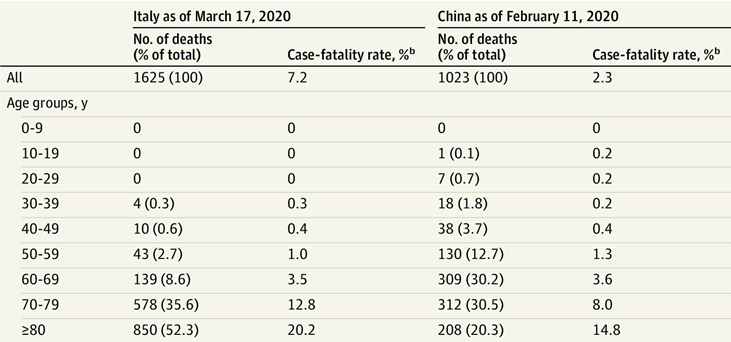
Among the factors that explain the higher mortality rate for COVID in Italy compared to China, there is certainly a higher average age of the Italian population than in China1. The Case Fatality Rate for COVID-19 in Italy was 7.2% compared to 2.3% in China. Stratifying patients by age (figure 1), mortality appears similar between the two countries in the age group from 0 to 69 years old, while old mortality is higher in Italy than in China in the age group from 70 years old. One explanation could be the higher average age of the Italian population (there are more over-90s in Italy than in China). Another hypothesis is that many deaths, attributed to COVID-19 were caused by underlying chronic diseases, such as diabetes and its complications.
It should be noticed that, in a group of 52 patients who died of COVID, 32 were affected by other pre-existing chronic diseases such as cerebrovascular disease, arterial hypertension, diabetes, chronic ischemic heart disease2.
COVID-19 in diabetic patients: increased risk of infection or complications?
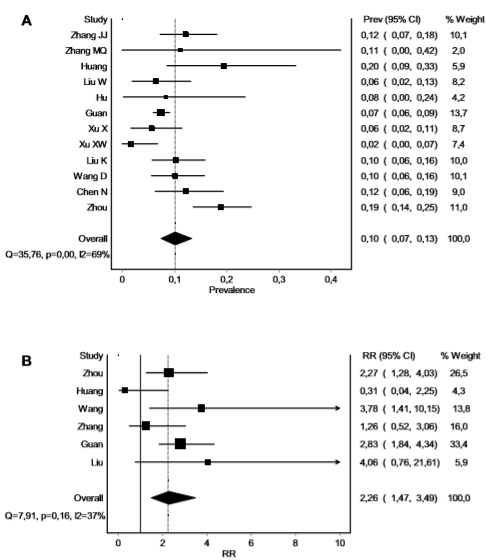
A meta-analysis of 12 Chinese studies (2108 patients) and some preliminary Italian data conducted in Padua showed that diabetes does not increase the risk of contracting SARS-CoV-2 infection. Among infected patients, the percentage of diabetics was not higher than the percentage of diabetics in the general population. In other terms, within two groups, one consisting of 100 infected patients and one consisting of 100 non-infected patients, there will always be the same number of diabetics. Therefore, it was shown that diabetes does not expose people to an increased risk of getting infected by SARS-CoV-23.
On the other hand, there are the higher number of complications and higher mortality for COVID-19 in diabetic patients than in non-diabetic patients. People with diabetes normally have a higher risk of developing complications during any acute disease, including infections. The results of this study confirm this general rule. Among people with COVID-19 infection with more severe prognosis, the prevalence of people with diabetes was higher. Therefore, in case of infection, people with diabetes have, as expected, an increased risk of complications. It should be noted that patients with a worse course of the disease had a higher average age and also, they were already affected by other diseases (check also “Virus transmission and consequences in children”). Therefore, it is still difficult to determine the real contribution of diabetes in determining the prognosis of SARS-CoV-2 infection and which mechanisms may be involved. From these data we can understand the importance of increased attention for diabetic patients affected by COVID-19.
Is it possibile to think about synergistic therapies in diabetic patients affected by COVID-19?
Some drugs modulating the action of the immune system cloud play an important role in the cytokine storm syndrome that COVID-19 implies, and among all the anti-diabetic drugs, the Di-Peptidil-Peptidase type 4 (DPP4) inhibitors was evaluated. DPP-4 is a ubiquitous protein in our body.
These drugs are used in the treatment of type 2 diabetes and act by preventing the degradation of DPP-4 protein. This molecule physiologically inhibits the action of incretins, that are hormones are able to regulate intestinal motility and to increase the sense of satiety, reducing the food intake. These drugs inhibiting the DPP-4 protein that acts as a brake for the incretins level, lead to an increased availability of incretins able to carry out their anti-diabetic action and leading to a regularization of glycemic values.
In addition, DPP-4 is a surface protein expressed on different subtypes of immune cells (lymphocytes, dendritic cells, macrophages) and it is capable of modulating the expression of various inflammatory molecules4. Many studies are focusing on the use of DPP-4 inhibitors in the treatment of serious inflammatory diseases.
Moreover, the binding of some species of Coronavirus to the DPP-4 receptor (which is also present in our respiratory system), be necessary for the virus to enter the respiratory cells. Therefore, DPP4-inhibitors could theoretically prevent the infection by acting in its initial stage5.
It has been shown that in the Middle East respiratory syndrome (MERS), an infectious disease caused by a different strain of human Coronavirus, DPP-4 plays a key role in the pathogenesis. Some mutated variants of the gene coding for this protein, would be protective against the infection6.
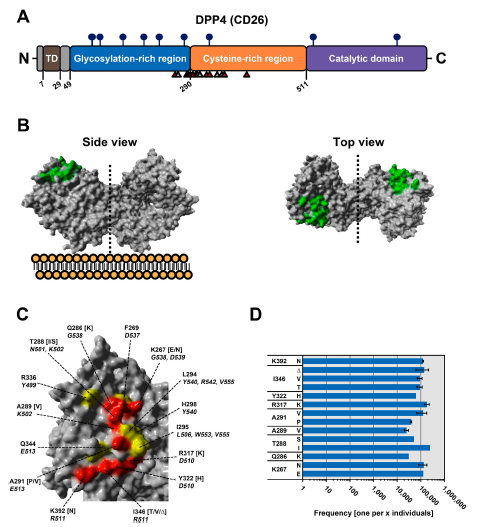
Currently the possibility of anti-viral efficacy of DPP-4 inhibitors has only been hypothesized on the basis of data generated in animal models and will require several studies to be proven. Only epidemiological evaluations already underway worldwide in diabetes patients who have contracted COVID-19 infection can support or refute the hypothesis of the possible associated protection. For diabetic patients, in case of Coronavirus infection, experts recommend maintaining adequate glucose intake, intensifying blood glucose controls. It is also recommended, in case of hospitalization, to switch from oral therapy to insulin therapy.
The epidemiological data available to date merely suggest that:
1) Diabetes does not increase the risk of COVID-19 infection;
2) Once infected, the infection would appear to be associated with a higher risk of complications than people who do not have diabetes, confirming what it is known in relation to other common infections, such as influenza, for which vaccination is strongly recommended in patients with diabetes.
3) It is essential that diabetes patients scrupulously follow hygiene and social distancing recommendations aimed at minimizing the risk of getting the infection and that they carefully follow the nutritional recommendations and pharmacological therapies in order to obtain and maintain a good metabolic control.
References:
- Onder G et al. Case-Fatality Rate and Characteristics of Patients Dying in Relation to COVID-19 in Italy [published online ahead of print, 2020 Mar 23]. JAMA. 2020;10.1001/jama.2020.4683. doi:10.1001/jama.2020.4683
- Yang X et al. Clinical course and outcomes of critically ill patients with SARS-CoV-2 pneumonia in Wuhan, China: a single-centered, retrospective, observational study [published correction appears in Lancet Respir Med. 2020 Apr;8(4):e26]. Lancet Respir Med. 2020;8(5):475-481. doi:10.1016/S2213-2600(20)30079-5
- Fadini GP et al. Prevalence and impact of diabetes among people infected with SARS-CoV-2. J Endocrinol Invest. 2020;43(6):867-869. doi:10.1007/s40618-020-01236-2
- Shao S et al. Dipeptidyl peptidase 4 inhibitors and their potential immune modulatory functions. Pharmacol Ther. 2020;209:107503. doi:10.1016/j.pharmthera.2020.107503
- Letko M et al. Functional assessment of cell entry and receptor usage for SARS-CoV-2 and other lineage B betacoronaviruses. Nat Microbiol. 2020;5(4):562-569. doi:10.1038/s41564-020-0688-y
- Kleine-Weber H et al. Polymorphisms in dipeptidyl peptidase 4 reduce host cell entry of Middle East respiratory syndrome coronavirus. Emerg Microbes Infect. 2020;9(1):155-168. Published 2020 Jan 21. doi:10.1080/22221751.2020.1713705
- https://www.diabete.com/diabete-covid19-raccomandazioni-pratiche-la-gestione-del-diabete-pazienti-infezione/
You may also like this

Europe’s top universities: Where research thrives in 2025

Microbes and Mood: Deciphering the Connection for a Happier You!

Can’t solve a maze? Ask a slime mould!

The neurobiology behind the Christmas spirit
