
by Giuseppe Scarlata, Antonino Napoleone, Domenico Gangemi | April 24, 2020
On 24 April 2020, after four months from the first case of Covid-19 reported to the World Health Organization (WHO), there is still inadequate access to diagnostic testing worldwide, as well as general disagreement over which priority and who should have access to it. This inconsistent strategic approach limits the traceability of symptomatic and asymptomatic infected people, which generally invalidates or underestimates the number of cases officially reported. Many local authorities are pushing towards the extended traceability of cases, as recently was strongly promoted in Lombardy, where the distribution of serological tests among the population was recently approved. The proposal is also important if considering that these tests will probably give the pass for the so-called “immunity passport” from the Coronavirus to those who have matured a certain level of immunity, and will be able to circulate freely without any risk of reinfection or transmission of the virus.
But what are serological tests and why are so important?
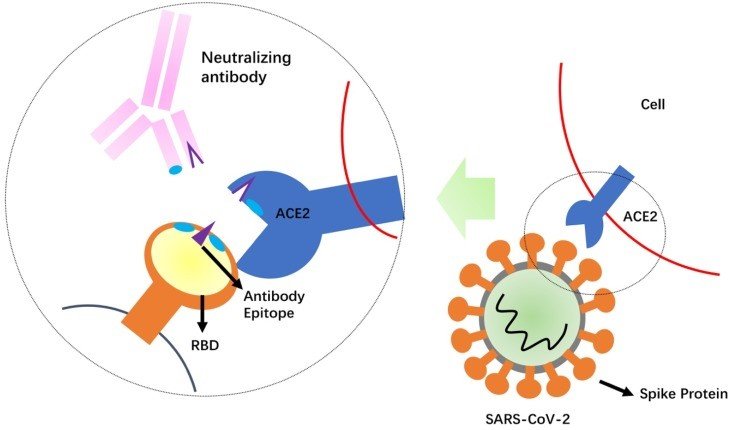
They are tests that are performed on serum (obtained by centrifuging a whole blood sample) in order to detect the maturation of specific antibodies against the virus after the infection. This defines the process of seroconversion, which turns the previously negative serological test results in positive. In Covid-19 patients, the seroconversion process and timing are still not fully clarified by the researchers, but more in detail, serological tests would identify specific antibodies that recognize and bind viral antigens (e.g. S1-domain) of the viral surface S-protein (Spike protein), used by SARS-CoV-2 to bind the human angiotensin-converting enzyme 2 (ACE2) receptor and penetrate the target cells in the respiratory tract (Figure 1). Therefore, serological tests are used to determine whether a subject has an ongoing infection or has recovered. The antibody classes investigated are class A (IgA, immunoglobulin A), class M (IgM, immunoglobulin M), and class G (IgG, immunoglobulin G). The total antibody titer should begin to be detectable 4-5 days after the onset of infection (both symptomatic or asymptomatic), with the presence of IgM in 70% of symptomatic patients after 8-14 days and the development of IgG after 14-24 days to a duration that is still not well established experimentally. The interpretation of the serological analysis would be crucial in the detection of new cases, both symptomatic and asymptomatic (perhaps negative to the nasopharyngeal swab), or to identify the individuals who have already been infected and recovered from the infection and that would be allowed to circulate without any potential risk of relapsing or transmitting the virus. Several serological tests are currently available and under development. Although at first glance it seems to be a simple solution for post “lock-down”, many scientists are studying the interaction between the virus and the immune system in the long term to demonstrate the validity of these tests, verifying that they work well and give reliable results.
The main serological tests currently available are:
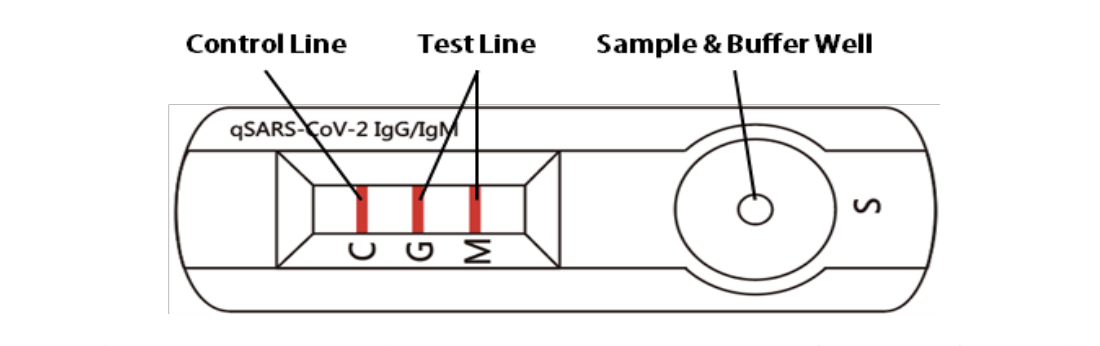
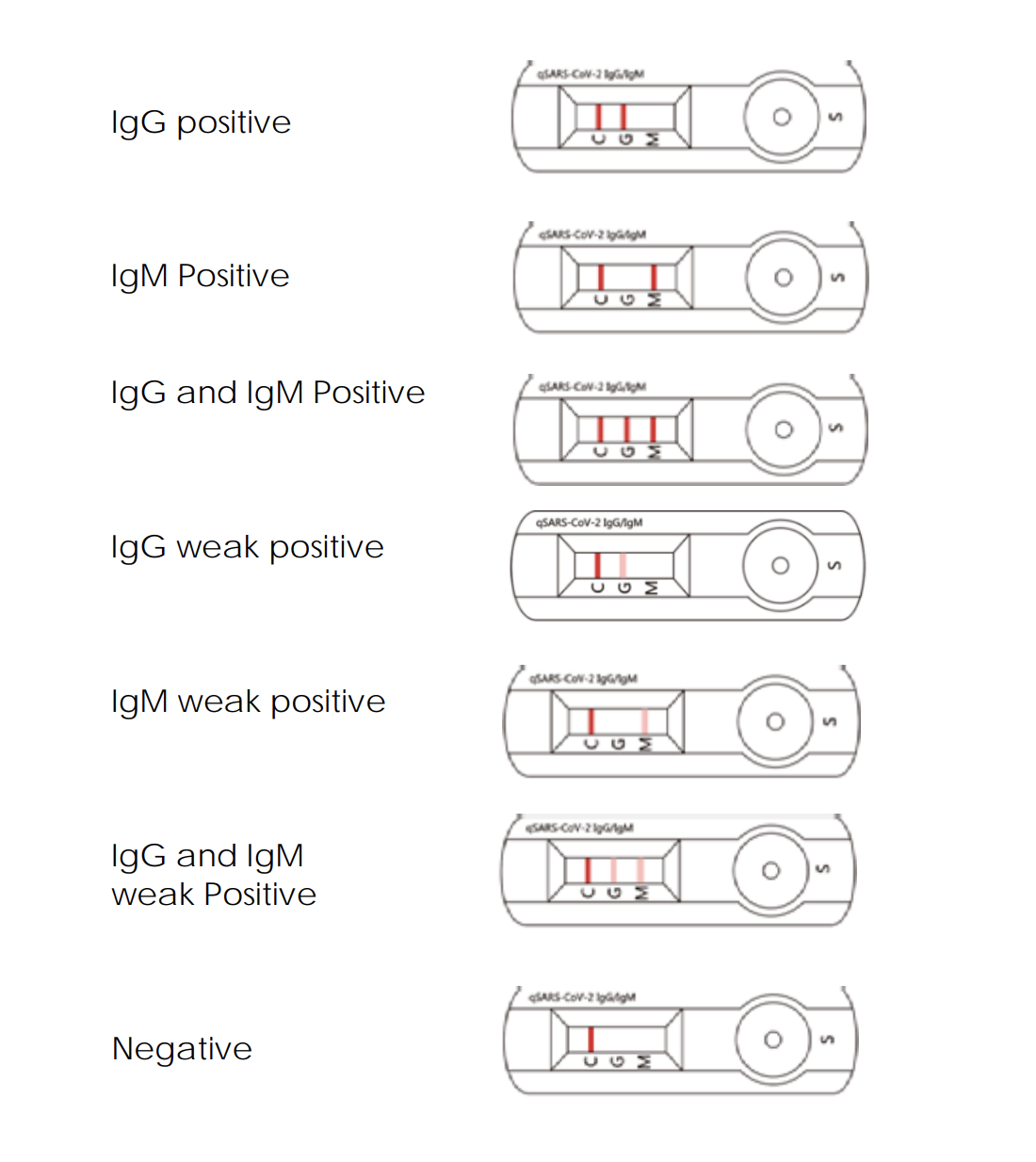
- The “rapid” immuno-chromatography (ICG) test for the qualitative detection of specific IgM and IgG antibodies against SARS-Cov-2 from a serum or plasma sample or from a simple drop of whole blood (finger prick). The result is shown in approximately 15 minutes with the same principle as pregnancy tests (Figures 2 and 3).
- The Enzyme-linked Immunosorbent assay (ELISA), for the quantitative detection in serum samples of IgG antibodies specific for the S-protein of the virus. The test is performed by qualified laboratory technicians and provides results over several hours but with greater accuracy and sensitivity than the rapid tests.
It is important to highlight that the current gold standard for the accurate diagnosis of SARS-CoV-2 infection is the molecular test using Real-Time Polymerase Chain Reaction (RT-PCR) on nasopharyngeal swabs. Although it is more expensive and time-consuming, serological tests are not intended to replace but to implement the use of the molecular diagnosis.
A further advantage of serological diagnosis has been reported from recent studies carried out in China, where a new therapeutic protocol is being tested, which consists of treating COVID-19 patients with plasma transfusions from convalescent or recovered donors who have developed protective antibodies against the virus. These clinical studies report an alleviation of symptoms and normalization of microbiological parameters in patients treated at multiple intervals with plasma transfusion cycles. Although this seems to be a promising approach, further studies are needed on a much larger cohort of patients.
In this obstacle race against the virus, scientists are breaking all records in research and diagnostics, however, fraud and illegal distribution of rapid tests without the “CE” mark have been reported and this is not permissible in the current situation. Such episodes unfortunately discredit the hard work of thousands of researchers only to get profits from people’s health. Share and have faith in medical sciences rather than the media, we all need to work together to stop all of this.
References:
- Coutard B. et al., Antiviral Research Apr 2020. https://doi.org/10.1016/j.antiviral.2020.104742.
- Loeffelholz MJ. et al., Emerging Microbes & Infections. Mar 2020. https://doi.org/10.1080/22221751.2020.1745095.
- Pan Y. et al., Journal of Infection 17 Apr 2020. https://doi.org/10.1016/j.jinf.2020.03.051.
- Ye M. et al., Journal of Medical Virology 15 Apr 2020. https://doi.org/10.1002/jmv.25882.
- Zhou G. et al., Int J Biol Sci. 2020 Mar 15. doi: 10.7150/ijbs.45123.
- Okba MA et al., Emerging Infectious Diseases 2020 July. DOI: 10.3201/eid2607.200841.
- Sheridan C. Nature Biotechnology 17 Apr 2020. doi: 10.1038/d41587-020-00010-2.
- Zhao J. et al., Clin Infect Dis. 2020 Mar 28. doi: 10.1093/cid/ciaa344.
You may also like this

Europe’s top universities: Where research thrives in 2025

Microbes and Mood: Deciphering the Connection for a Happier You!

Can’t solve a maze? Ask a slime mould!

The neurobiology behind the Christmas spirit
